AI--LangChain会话记忆

AI–LangChain会话记忆

1.Memory临时会话记忆

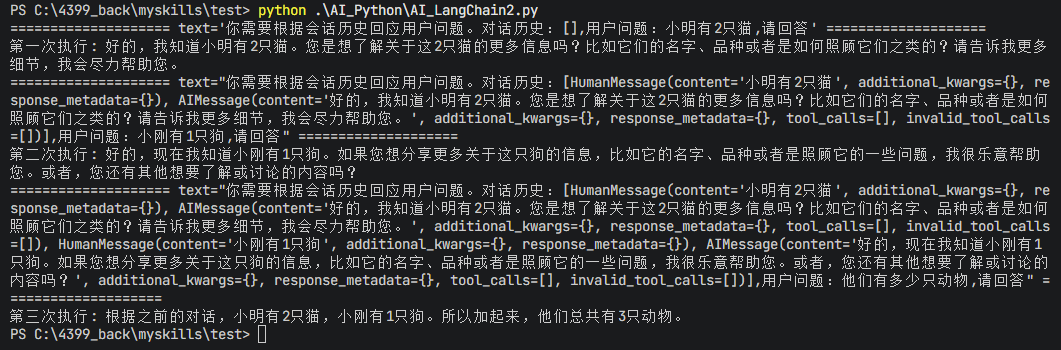
  在大模型的使用中,免不了要封装历史记录的功能,而除了自行维护历史消息外,也可以借助LangChain内置的历史记录附加功能,LangChain提供了History功能,帮助模型在有历史记忆的情况下进行回答

  • RunnableWithMessageHistory

  在原有链的基础上创建带有历史记录功能的新链

  • InMemoryChatMessageHistory

  为历史记录提供内存存储(临时使用的需求时)

1
2
3
4
5
6
7
8
9
10
11
12
13
14
15
16
17
18
19
20
21
22
23
24
25
26
27
28
29
30
31
32
33
34
35
36
37
38
39
40
41
42
43
44
45
46
47
48
49
50
51
52
53
54
55
56
57
58
59
60
61
from langchain_core.runnables.history import RunnableWithMessageHistory
from langchain_core.chat_history import InMemoryChatMessageHistory
from langchain_core.prompts import MessagesPlaceholder , ChatPromptTemplate
from langchain_core.output_parsers import StrOutputParser
from langchain_community.chat_models.tongyi import ChatTongyi

model = ChatTongyi(model="qwen-max")

# prompt = PromptTemplate.from_template(
# "你需要根据会话历史回应用户问题。对话历史:{chat_history},用户问题:{input},请回答"
# )
chat_prompt = ChatPromptTemplate.from_messages([
("system", "你需要根据会话历史回应用户问题,对话历史:{chat_history}"),
MessagesPlaceholder("chat_history"),
("human", "请回答如下问题:{input}"),
])


str_parser = StrOutputParser()

def print_prompt(full_prompt):
print("="*20 ,full_prompt, "="*20)
return full_prompt

base_chain = chat_prompt | print_prompt | model | str_parser

store = {} #key就是session_id, value就是InMemoryChatMessageHistory对象

#通过会话id获取InMemoryChatMessageHistory对象
def get_history(session_id):
# 如果store中不存在session_id, 则创建一个新的InMemoryChatMessageHistory对象
if session_id not in store:
store[session_id] = InMemoryChatMessageHistory()
return store[session_id]

#通过RunnableWithMessageHistory获取一个新的带有历史记录功能的会话chain
conversation_chain = RunnableWithMessageHistory(
base_chain, # 要添加历史记录功能的chain
get_history, # 通过会话id获取InMemoryChatMessageHistory对象
input_messages_key="input", # 输入消息的key
history_messages_key="chat_history", # 历史记录的key
)

if __name__ == "__main__":
#固定格式,添加LangChain的配置,为当前程序配置所属的session_id
session_config = {
"configurable": {
"session_id": "user_001"
}
}


res = conversation_chain.invoke({"input": "小明有2只猫"},session_config)
print("第一次执行:",res)

res = conversation_chain.invoke({"input": "小刚有1只狗"},session_config)
print("第二次执行:",res)

res = conversation_chain.invoke({"input": "他们有多少只动物"},session_config)
print("第三次执行:",res)


2.Memory长期会话记忆

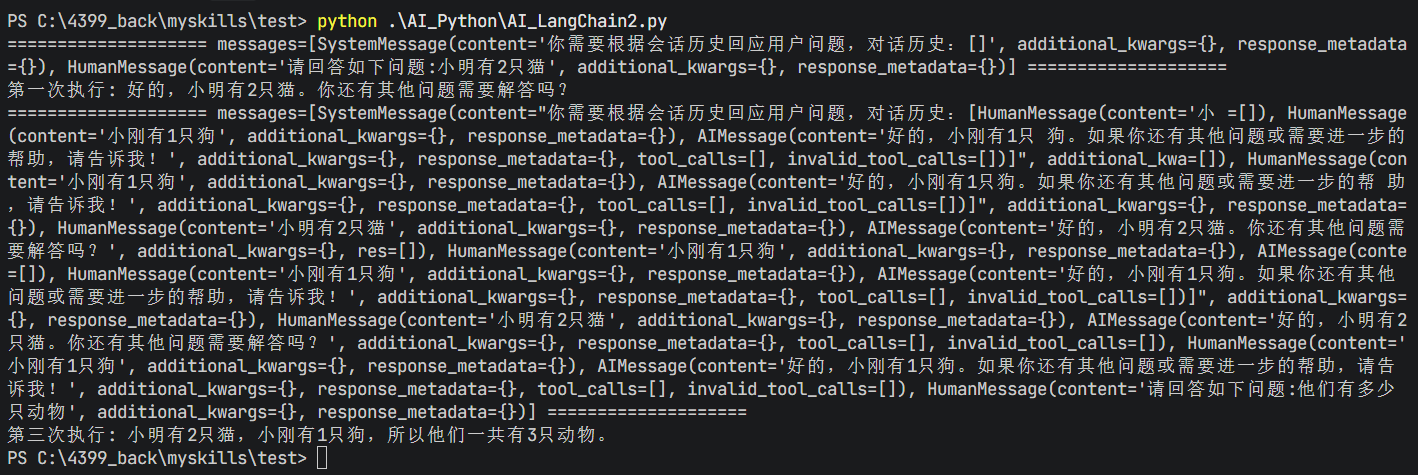
  在使用大模型的时候,短期记忆肯定是不够的,这时候我们就需要了解长期会话记忆,在LangChain的官方注释中给出了相关实现的指南,并给出了基于文件的历史消息存储实例代码,我们可以自行实现一个基于json格式和本地文件的会话数据保存

  FileChatMessageHistory类实现,核心思路是基于文件存储会话记录,以session_id为文件并,不同session_id有不同文件存储消息

1
2
3
4
5
6
7
8
9
10
11
12
13
14
15
16
17
18
19
20
21
22
23
24
25
26
27
28
29
30
31
32
33
34
35
36
37
38
39
40
41
42
43
44
45
46
47
48
49
50
51
52
53
54
55
56
57
58
59
60
61
62
63
64
65
66
67
68
69
70
71
72
73
74
75
76
77
78
79
80
81
82
83
84
85
86
87
88
89
90
91
92
93
94
95
96
97
98
99
100
101
102
103
104
105
#官方memory长期会话记忆模版
import json,os
from typing import Sequence
from langchain_core.messages import messages_to_dict,messages_from_dict, BaseMessage,message_to_dict
from langchain_core.chat_history import BaseChatMessageHistory
from langchain_core.runnables.history import RunnableWithMessageHistory
from langchain_core.chat_history import InMemoryChatMessageHistory
from langchain_core.prompts import MessagesPlaceholder , ChatPromptTemplate
from langchain_core.output_parsers import StrOutputParser
from langchain_community.chat_models.tongyi import ChatTongyi

class FileChatMessageHistory(BaseChatMessageHistory):
# 初始化会话id和存储路径
def __init__(self, session_id, storage_path):
self.session_id = session_id
self.storage_path = storage_path
self.file_path = os.path.join(self.storage_path, f"{self.session_id}.json")

#确保存储路径存在
os.makedirs(os.path.dirname(self.file_path), exist_ok=True)

# 添加消息到会话历史
def add_messages(self, message: Sequence[BaseMessage]) -> None:
# Sequence序列 类型list tuple
all_messages = list(self.messages) #已有的消息列表
all_messages.extend(message) # 合并新消息

# 将数据同步写入到本地文件中
# 类对象写入文件 -> 一堆二进制
# 为了方便,可以将BaseMessage消息转为字典(借助json模块以json字符串写入文件)
# 官方message_to_dict: 单个消息对象 (BaseMessage类实例) -> 字典
new_messages = [message_to_dict(message) for message in all_messages]
#new_messages = messages_to_dict(all_messages)

#将数据写入文件
with open(self.file_path, "w", encoding="utf-8") as f:
json.dump(new_messages, f)

# 获取会话历史消息
@property # @property装饰器将messages方法转换为成员属性
def messages(self) -> list[BaseMessage]:
# 当前文件内: list[字典]
try:
with open(self.file_path, "r", encoding="utf-8") as f:
message_data = json.load(f)
return messages_from_dict(message_data)
except FileNotFoundError:
return []
def clear(self) -> None:
# 清空文件内容
with open(self.file_path, "w", encoding="utf-8") as f:
json.dump([], f)


#============================================================
model = ChatTongyi(model="qwen-max")

# prompt = PromptTemplate.from_template(
# "你需要根据会话历史回应用户问题。对话历史:{chat_history},用户问题:{input},请回答"
# )
chat_prompt = ChatPromptTemplate.from_messages([
("system", "你需要根据会话历史回应用户问题,对话历史:{chat_history}"),
MessagesPlaceholder("chat_history"),
("human", "请回答如下问题:{input}"),
])


str_parser = StrOutputParser()

def print_prompt(full_prompt):
print("="*20 ,full_prompt, "="*20)
return full_prompt

base_chain = chat_prompt | print_prompt | model | str_parser


#通过会话id获取InMemoryChatMessageHistory对象
def get_history(session_id):
return FileChatMessageHistory(session_id, "./chat_history")

#通过RunnableWithMessageHistory获取一个新的带有历史记录功能的会话chain
conversation_chain = RunnableWithMessageHistory(
base_chain, # 要添加历史记录功能的chain
get_history, # 通过会话id获取InMemoryChatMessageHistory对象
input_messages_key="input", # 输入消息的key
history_messages_key="chat_history", # 历史记录的key
)

if __name__ == "__main__":
#固定格式,添加LangChain的配置,为当前程序配置所属的session_id
session_config = {
"configurable": {
"session_id": "user_001"
}
}


# res = conversation_chain.invoke({"input": "小明有2只猫"},session_config)
# print("第一次执行:",res)

# res = conversation_chain.invoke({"input": "小刚有1只狗"},session_config)
# print("第二次执行:",res)

res = conversation_chain.invoke({"input": "他们有多少只动物"},session_config)
print("第三次执行:",res)

AI--LangChain会话记忆
https://one-null-pointer.github.io/2026/01/19/AI --LangChain会话记忆/
Author
liaoyue
Posted on
January 19, 2026
传送口